The Weekend Edition: The Early Version of the Future Is Always Embarrassing
Blockbuster laughed at Netflix. Oracle called the cloud 'idiocy'. A romp through history's most confident wrong predictions — and why AI sceptics sound the same.

Carl Grant
BrightMind Studio
In 2008, the Chief Executive of Blockbuster, Jim Keyes, made a prediction about streaming that aged like milk left out in the Nevada sun:
I've been frankly confused by this fascination that everybody has with Netflix.
By 2024, Netflix had sailed past 300 million subscribers. Blockbuster was down to a single, lonely shop in Oregon, presumably wondering whether it should have pivoted to selling magic beans.
It's easy to laugh in hindsight. But history keeps whispering the same comforting truth: the world's greatest experts are spectacularly, gloriously rubbish at predicting the future. Every time a real innovation shows up, our collective default setting is panic, cynicism and flat denial.
So if you're quietly worried that AI is a flawed fad, welcome. You're standing in a very long, highly distinguished queue of people who got the future completely wrong, right behind the chap who was certain the Earth was flat.
A short catalogue of very confident, very wrong predictions
The computing disasters
- →Cloud computing (2008). Oracle's Larry Ellison called it 'complete gibberish… when is this idiocy going to stop?' Cloud is now a $700-billion-a-year market, and Oracle happily sells billions of dollars of the 'idiocy' he mocked.
- →The iPhone (2007). Microsoft's Steve Ballmer laughed: 'There's no chance that the iPhone is going to get any significant market share. No chance.' Apple has since sold over 2.3 billion of them. The chance was, it turns out, a smidge above zero.
- →Computer memory (1981). A line widely pinned on Bill Gates claimed '640K ought to be enough for anybody.' The phone in your pocket carries tens of thousands of times more.
- →The home computer (1977). Ken Olsen of Digital Equipment Corporation: 'There is no reason for any individual to have a computer in his home.' There are now roughly 2 billion PCs in use. His company sits in the museum, somewhere near the dodo.
- →The entire computer market (1943). IBM's Thomas Watson: 'I think there is a world market for maybe five computers.' Off by a few billion, plus trillions of microchips.
The internet and shopping sceptics
- →The internet's impact (1998). Nobel-winning economist Paul Krugman: 'By 2005 or so, it will become clear that the Internet's impact on the economy has been no greater than the fax machine's.' Today 5.5 billion people run the global economy through it. The fax machine is still, well, a fax machine.
- →Online shopping (1995). Clifford Stoll asked in Newsweek: 'How come my local mall does more business in an afternoon than the entire Internet handles in a month?' US online retail alone now clears over $1 trillion a year.
- →The telegraph (1854). Even Henry David Thoreau shrugged: 'Maine and Texas, it may be, have nothing important to communicate.' Twelve years later a cable was humming under the Atlantic.
The entertainment misfires
- →The VCR (1982). Hollywood lobbyist Jack Valenti: 'The VCR is to the American film producer as the Boston strangler is to the woman home alone.' A touch dramatic. Home video soon out-earned the box office.
- →The Beatles (1962). Decca's Dick Rowe passed on them: 'Guitar groups are on the way out, Mr Epstein.' The Beatles went on to sell 600 million records.
- →Rock 'n' roll (1955). Variety magazine: 'It will be gone by June.' It has been roughly 800 Junes.
- →Talking pictures (1925). Harry Warner of Warner Bros: 'Who the hell wants to hear actors talk?' Silent film was basically extinct within five years.
The transport and warfare blunders
- →Tanks (1916). An aide to Field Marshal Haig: 'The idea that cavalry will be replaced by these iron coaches is absurd. It is little short of treasonous.' Armoured divisions rather decided the next world war.
- →Military aircraft (1911). Marshal Ferdinand Foch: 'Airplanes are interesting toys but of no military value.' Air power turned out to be fairly decisive.
- →The aeroplane (1903). The New York Times guessed a flying machine might be 'one million to ten million years' away. The Wright brothers managed it 69 days later.
- →Submarines (1901). Even H.G. Wells said his imagination 'refuses to see any sort of submarine doing anything but suffocating its crew and floundering at sea.' They were decisive naval weapons within fifteen years.
The science and medicine miscalculations
- →X-rays (1896). Physicist Lord Kelvin: 'X-rays will prove to be a hoax.' They were saving lives in hospitals within months.
- →Nuclear power (1933). Nobel laureate Ernest Rutherford called atomic energy 'moonshine.' It now supplies around 10% of the world's electricity.
- →Germ theory (1872). Professor Pierre Pachet: 'Louis Pasteur's theory of germs is ridiculous fiction.' It became the bedrock of modern medicine within twenty years.
And the original tech panic: writing (370 BCE)
The greatest overreaction of all belongs to Socrates, who argued fiercely against the terrifying new technology of writing. He was convinced that relying on written words would rot people's memories and hollow out their minds.
The beautiful irony: the only reason we know he said any of this is that his student Plato wrote it down. Nice work, Plato. You proved your teacher both right and wrong in a single move.
Why the AI sceptics are following a very old script
So here we are again. Like the internet and the smartphone before it, AI is stumbling through its awkward teenage years, and the sceptics aren't entirely wrong about the flaws. Right now it can be genuinely maddening:
- →It hallucinates fake facts with total confidence.
- →It forgets to cite its sources.
- →It occasionally invents legal cases that never happened.
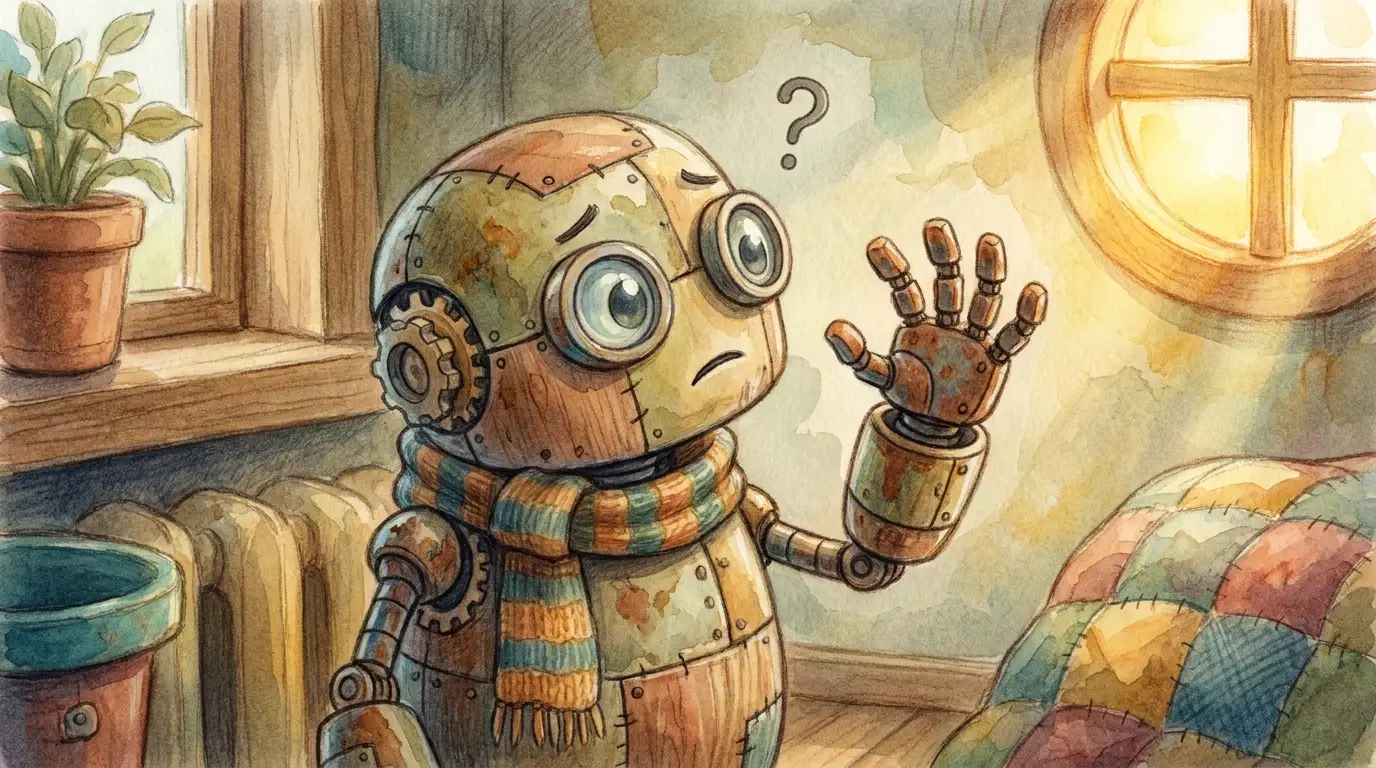
- →It struggles with basic anatomy, and yes, it sometimes gives people six fingers.
- →It writes like a prize-winning novelist one minute and a distracted eight-year-old the next.
And yet millions of people already use it every single day: to debug code, untangle contracts, draft images, summarise hour-long meetings, translate manuals and beat the blank page that stops most work before it starts.
AI is still, in places, a bit rubbish. But so was dial-up internet (you remember the noise). So was the buffering wheel on early streaming. So was the brick-sized mobile phone, the crashing desktop, and the plain grey text of the world's first website.
The early version of the future is almost always a little embarrassing. Then it refines, it adapts, and it quietly becomes the present.
History doesn't repeat itself, but the people betting against innovation reliably do. Don't let your imagination fail you just because the future looks a bit messy, and has one or two too many fingers, today.
If you'd rather ride the curve than bet against it, we send ten plain-English AI commands to steal every Monday. Free, no jargon, no hype.
Join The Weekly Command Drop →Get The Brief by email
One AI tool, one tip, one insight for small business owners. Free, every week.
Found this useful? Share it